I am learning flutter from JustAcademy, They provide very much great environment where people gather and work simultaneously. totally project based training institute.
MOHD ABU BAKAR ANSARI
Flutter Developer
Awesome Experience. I am a Front-end Web Designer working at Star India for 3 years now. I applied for Full-stack development and my experience has been phenomenal & they really do help with placements exceptionally. Thank you Roshan sir so much.
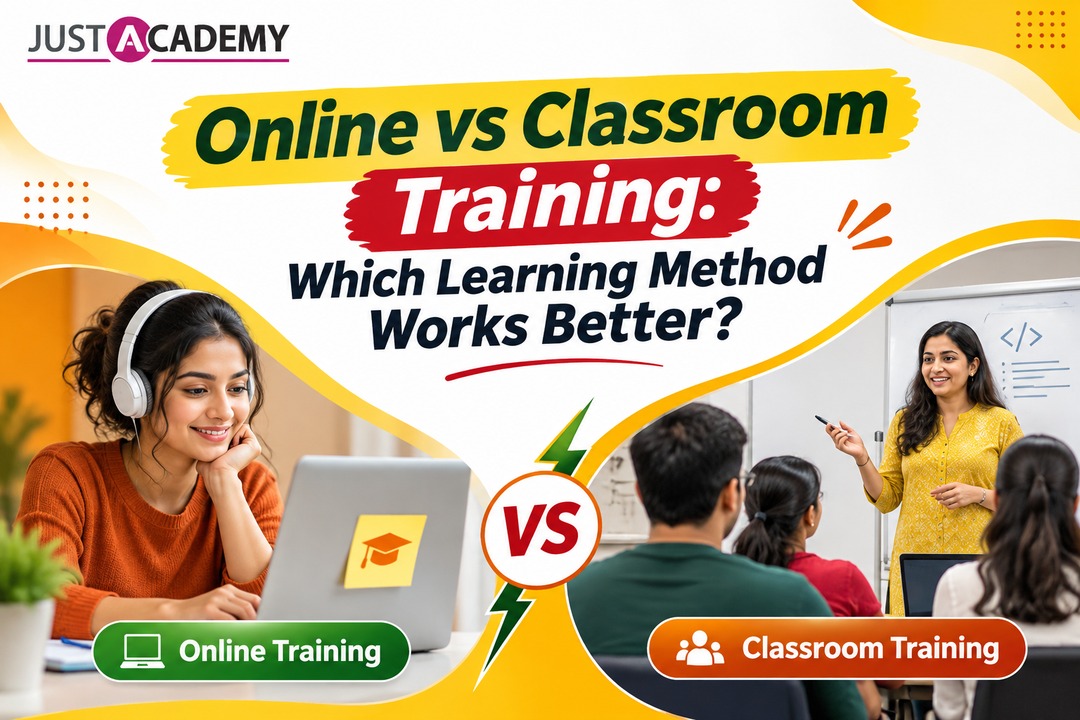
A practical look at instructor led and mentor led live interactive sessions, and how learners in Hyderabad can get classroom quality teaching without leaving the city
Every few months, a new batch of students and working professionals in Hyderabad sits down with the same question. Should they sign up for a classroom somewhere in the city, or should they learn from home? The debate around online education versus offline education has been running for years now, and it still has no tidy answer, mostly because people argue about the format when they should be arguing about the teaching.
Here is the honest version of this conversation. A bad classroom and a bad video course fail learners in exactly the same way: nobody notices when you are lost. A good classroom and a good online program succeed for the same reason: a real person is watching your progress, correcting you, and pushing you a little further than you would go alone. Once you see it that way, the question changes from “online or offline” to “who is teaching me, how closely, and what happens when I get stuck?”
That second question is exactly what this guide is built around. If you are in Hyderabad and curious about mobile development, JustAcademy’s Flutter training for Hyderabad learners is a good example of live teaching delivered to your screen, and you can see the format yourself by registering for a free demo session before you spend a rupee. Whatever you end up choosing, read on, because the next few sections will help you judge any course by the standard that actually matters.
A quick word on who is writing this. JustAcademy is an ISO certified technology training institute based in Mumbai, with classroom branches in Mumbai and Pune and live interactive online courses open to learners anywhere in India and abroad. Our offline institute sits in Mumbai, so for learners in Hyderabad the practical route is live training online, delivered by instructors and mentors in real time. This blog looks at what that experience should feel like, how it compares with learning offline in a physical room, and how to choose without second guessing yourself later.
Why Hyderabad Learners Are Rethinking How They Study
A City Built on Technology Has Different Learning Needs
Hyderabad is not a typical education market. Between HITEC City, Gachibowli, Madhapur and the growing product company belt, the city has an unusually high share of people who work in or near technology. Many of them are not fresh graduates. They are testers who want to move into automation, support engineers eyeing development roles, designers adding product skills, or commerce graduates who realised that data was where the interesting jobs were.
These learners have a problem that a traditional classroom was never designed to solve. They have jobs, long commutes, and weekends that are already crowded. Spending ninety minutes each way on traffic to sit in a room for two hours is a heavy tax on anyone’s skill development plans. Online training courses removed that tax, and that is the real reason digital education took off here, not because it was fashionable.
What Changed When Digital Education Arrived
Before the last few years, learning online mostly meant recorded lectures and PDF notes. It was cheap, flexible and lonely. Plenty of people bought a course online, finished two chapters, and quietly abandoned it. Completion rates for self paced courses have always been dismal for this reason.
What changed is the arrival of properly run live classes. Video calling became reliable, shared screens became normal, and instructors learned how to teach through a camera without losing the room. Suddenly classes online could carry the same back and forth that a physical room offered. The question stopped being whether online could match offline, and became which online programs were actually doing the work.
Where the Real Confusion Comes From
Most of the confusion is a labelling problem. A recorded video library, a live webinar with five hundred attendees, and a small batch with an instructor and a mentor are all called “online classes.” They are completely different products. Comparing online classes vs offline classes without separating these categories is like comparing “restaurants” without distinguishing a roadside stall from a tasting menu.
So before we go further, let us fix the vocabulary. In this blog, when we praise online learning, we mean live, instructor led, mentor supported sessions with real interaction. When we criticise it, we mean passive video consumption. Keep that distinction in your head and the rest of the argument will feel obvious.
What the Traditional Classroom Actually Gave Us
The Pull of the Traditional Blackboard
It is fashionable to mock traditional education, but anyone who has learned something difficult at a blackboard knows what it offered. A teacher drawing a diagram slowly, rubbing it out, drawing it again, watching your face to see if it landed. The traditional blackboard forced a certain pace. Nothing appeared until the teacher wrote it, which meant you followed the thought as it formed, rather than receiving a finished slide.
That pacing is valuable for technical subjects. When an instructor builds a data structure on a whiteboard or walks through a database schema line by line, learners absorb the reasoning, not just the result. Good live online teachers have borrowed this habit, using digital whiteboards and live coding to rebuild that same slow, visible thinking.
Student Teacher Interaction in the Old Model
The strongest argument for the traditional classroom has always been student teacher interaction. In a physical room, you can lean over and ask your neighbour. You can catch the instructor at the end of class. You can see confusion spread across the room and watch the teacher adjust. Those small human feedback loops are why many people still say they learn better offline.
It is a fair point, and it deserves a straight answer rather than a dismissal. The loops exist offline because the room makes them cheap. The only question for online programs is whether they rebuild those loops deliberately. Some do. Many do not. When you evaluate a course, how quickly can a student reach the teacher is a better test than whether the building has air conditioning.
Where the Traditional Learning Method Starts to Struggle
The traditional learning method has weaknesses that people tend to forget when they feel nostalgic. The traditional way of teaching assumes one pace for everyone. If you are fast, you wait. If you are slow, you get left behind or too embarrassed to ask. The syllabus is often frozen long after the industry has moved on, because updating printed material and retraining faculty is slow.
There is also the access problem. A great instructor can only be in one room. If the best trainer in your subject lives in Mumbai and you live in Hyderabad, the traditional method in teaching offers you nothing, while a live online batch brings that trainer to your laptop. Geography used to decide who got excellent teaching. It no longer has to.
How Online Learning Programs Grew Beyond Recorded Videos
E Learning and Digital Learning, Explained Without the Hype
E learning is a broad umbrella. It covers anything from a ten minute compliance video at work to a six month live programme with assignments and reviews. Digital learning is similar, describing the use of technology in the process of learning rather than any specific teaching style. Neither term tells you whether the experience is good.
What matters is the design. Strong online learning programs combine a clear syllabus, regular live teaching, practice tasks that match the pace of the class, and someone who reviews your work. Weak ones dump content and hope for motivation. If a course online cannot tell you how your questions will be answered and by whom, treat that as the answer.
The Trouble With Passive Platform Learning Online
Platform learning online has a place. It is great for refreshing a topic, exploring a subject before committing, or picking up a single tool you already half know. Anyone can learn digital with Google tutorials and free resources for an afternoon, and that is a perfectly sensible way to test your interest.
The trouble starts when passive content is expected to carry a whole career change. Watching someone else build an application feels like learning, but your own hands have not done anything. Without deadlines, review and a person who notices when you have stopped logging in, most learners drift. This is not a character flaw. It is how human motivation works, and it is why structured, live formats outperform libraries for people with limited time.
The same pattern shows up in marketing education. Plenty of people try online marketing courses on free platforms and learn vocabulary but not judgement. If you want to study digital marketing properly, with live campaigns, feedback on your ad copy and real analytics reviews, a guided programme matters. JustAcademy’s digital marketing course in Mumbai is taught in the classroom, and the same curriculum is available as a live online digital marketing course that learners in Hyderabad can attend from home.
Where Online Learning vs Offline Learning Actually Gets Decided
The phrase online learning vs offline learning suggests a clean contest, but the result depends on four things that have nothing to do with the screen or the room. First, how many learners share one instructor. Second, how often you are expected to produce work and have it reviewed. Third, how fast doubts get resolved. Fourth, whether anyone follows up when you disappear for a week.
A live batch of twenty with weekly reviews will beat a classroom of eighty with no follow up, every time. A small offline class with a caring trainer will beat an unmonitored video library. Neither format wins by default. Judge the structure, and the format sorts itself out.
Live Interactive Sessions: The Missing Middle Between Videos and Classrooms
What Live Interactive Training Really Looks Like
Live interactive sessions sit in the useful middle. You get the schedule and presence of a classroom with the convenience of studying from your own desk. The instructor is teaching right now, to your batch, and can see your questions as they appear. You can interrupt, share your screen, show your broken code and have it fixed while everyone watches.
That last part matters more than it sounds. Watching a classmate’s error get diagnosed live teaches you debugging habits that no polished tutorial can, because tutorials only show the happy path. In live interactive training, you see mistakes, dead ends and recoveries, which is how real work actually goes.
Instructor Led Training Done Properly
Instructor led training works when the instructor is a practitioner, not just a presenter. The difference shows up in the small moments. A practitioner says “I would not do it this way in production, here is why.” A presenter reads the next slide. When you are paying for a course for online delivery, ask who the trainers are and what they have built outside the classroom.
Take mobile development as an example. A trainer teaching Flutter live can show how widgets rebuild, how state moves between screens, and why a certain layout breaks on smaller phones, all in the same session. If you want to understand why this framework has become such a common choice for product teams, this explainer on how Flutter helps businesses build apps faster in 2026 gives the business side of the story, which makes the live classroom content easier to place in context.
Interactive Learning and the Power of Quick Doubt Clearing
Interactive learning is not a fancy phrase for polls and emojis. It means your confusion changes what happens next. A good instructor notices that three people asked the same thing and slows down. They pause and ask someone to explain the concept back. They set a ten minute exercise right after introducing a topic, while it is still fresh.
Time to answer is the hidden metric. A doubt cleared in two minutes keeps your momentum. A doubt that waits two days quietly kills it. This is where live formats and instructor access matter more than any feature list, and it is the first thing worth asking any training provider about.
Mentor Led Sessions and the Skills a Syllabus Never Teaches
Mentor Led Guidance Beyond the Syllabus
An instructor teaches the course. A mentor looks after the learner. These are related jobs but not the same, and the best programmes include both. Mentor led sessions are smaller, more personal and more flexible. They are where you bring your resume, your confusing project, your fear that you are too old to switch careers, and your plan to leave your current job in six months.
A mentor can tell you which topics to go deeper on for the roles you actually want. They can look at your project and say “this works, but an interviewer will ask about X, so prepare for it.” That specific, situation aware advice is almost impossible to get from recorded content and often missing even from crowded classrooms.
Soft Skills Development and Enhancing Communication Skills
Technical ability gets you shortlisted. Communication gets you hired. Soft skills development is routinely ignored in technical courses, and then everyone wonders why capable candidates stumble in interviews. Explaining your own project clearly, asking a smart question when a requirement is vague, disagreeing politely in a review, these are learnable skills.
Enhancing communication skills works best through repetition with feedback. Mock interviews, project walk throughs and presenting your work to a small group are exactly the sort of activities live mentor led sessions can host. Done online, they are surprisingly effective, because you also practise the format that most first round interviews now use: a video call with a stranger who is judging how clearly you think.
Online Learning vs Offline Learning When It Comes to Confidence
Here is a subtle point in the online learning vs offline learning debate. Some people find it easier to ask questions through a screen. The social pressure of a physical room, with thirty heads turning, silences many learners who would happily type a doubt in chat or unmute in a small batch. Others do the reverse and need the energy of a room.
Neither preference is wrong. The sensible approach is to know yourself. If you thrive on being around people and can reach a physical institute easily, learning offline in a classroom is a valid choice, and JustAcademy runs classroom batches in Mumbai and Pune. If you are in Hyderabad, live online batches give you the same teaching without a relocation or a flight.
Putting Online and Offline Side by Side
A Quick Comparison Table
Sometimes a table is the quickest way to see the trade offs. Here is how a well run live online programme compares with a traditional classroom and with passive recorded learning.
Factor
Traditional Classroom
Live Interactive Online
Recorded Online Courses
Instructor presence
Physical, fixed location
Live on screen, any location
None
Student teacher interaction
High, if batch is small
High, with chat, voice and screen share
Very low
Pace
One pace for the room
Guided pace with replays and mentor support
Fully self paced
Commute and time cost
High for most city learners
None
None
Access to top trainers
Limited by city
Open to anyone with a connection
Open, but no interaction
Accountability
Attendance and peer pressure
Scheduled sessions, reviews, mentor follow up
Depends only on you
Practice and feedback
Depends on the institute
Regular, with code and project reviews
Rarely reviewed
Soft skills practice
Natural, in person
Possible through mock interviews and presentations
Almost none
Flexibility
Low
Medium to high
Very high
Best suited for
Learners near the campus who like in person energy
Working people and students outside the campus city
Casual exploration and revision
Reading the Table Honestly
The table does not crown a winner, and it should not. Look at the live interactive column and notice what it borrows from each side. It keeps the instructor presence and accountability of a classroom while keeping the flexibility and reach of online learning. That is why this format has quietly become the default choice for working professionals.
The recorded column is not worthless. It is simply a different tool, best used before or after a live programme, not instead of it. Many strong learners use recordings to revise a session they have already attended, which is a much better use than watching alone and hoping for the best.
Cost, Time and the Hyderabad Commute
Think about the hours. A two hour evening class that requires ninety minutes of travel each way costs five hours of your day. Do that three times a week and you have spent fifteen hours, which is nearly two working days, on moving between places. Over a six month course, the commute alone can eat hundreds of hours.
Online training gives those hours back for practice, which is what actually builds skill. There is also the cost side. Avoiding relocation, daily transport and sometimes accommodation changes the real price of a course. When comparing options, compare the total cost of attending, not just the fee on the brochure.
Courses That Work Surprisingly Well When You Learn Online From Hyderabad
Mobile Development and App Building
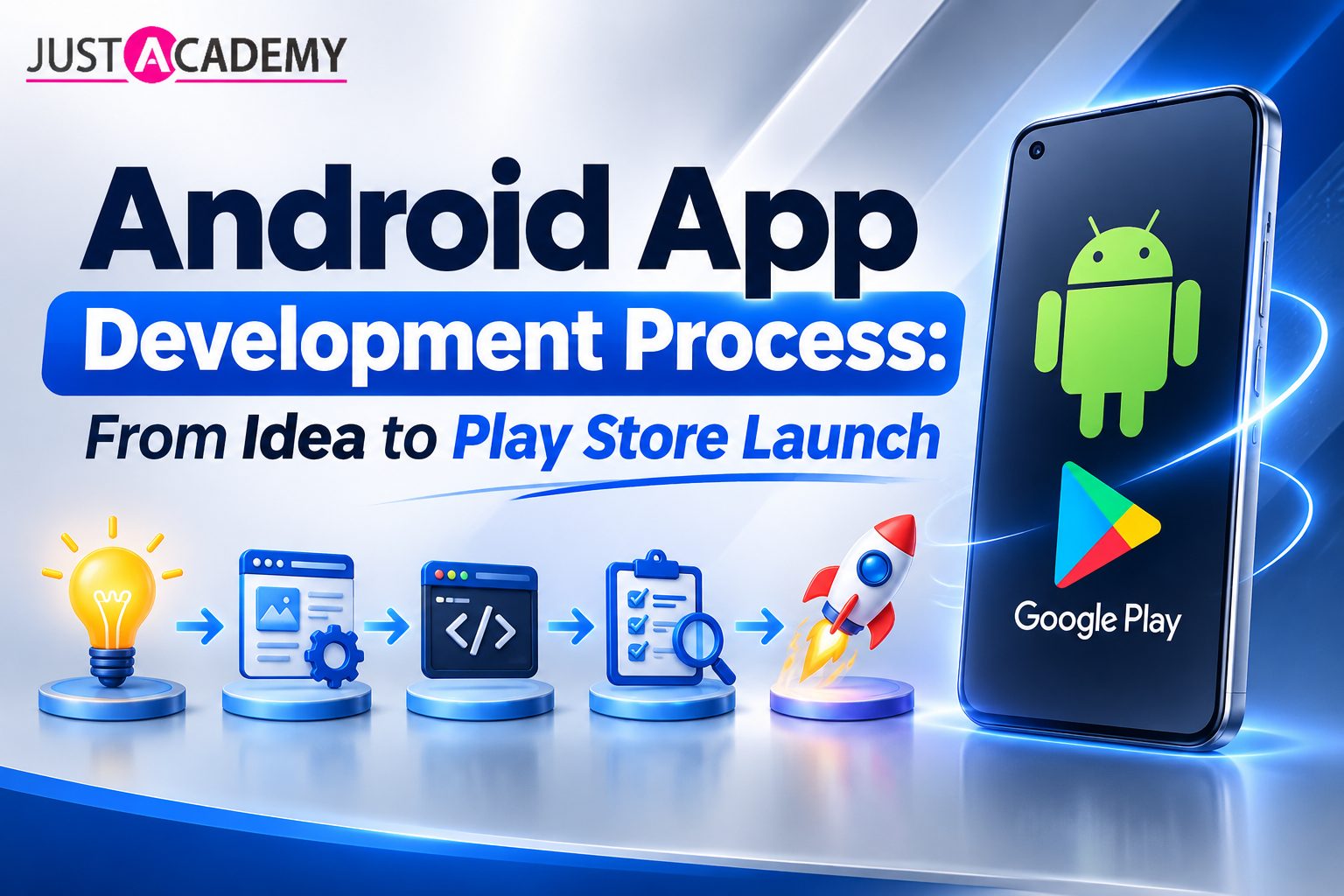
Mobile app development rewards live teaching because so much of it is visual and iterative. You write something, run it on an emulator, see it break, and tweak it. When an instructor is watching that loop with you, you progress much faster than when you are guessing alone. If your goal is to ship an app, this walkthrough of the Android app development process from idea to Play Store launch shows the stages every beginner should understand, from planning and design to testing and release.
Learners in Hyderabad who want to go cross platform usually look at Flutter, because one codebase serves both Android and iOS. Pairing that with a live instructor means you learn the framework and the product thinking around it in the same room, even if the room is a video call.
Design and the Value of Live Critique
Design is one of the clearest cases for live, interactive teaching. Nobody learns visual judgement from a lecture. They learn it when someone looks at their screen and says “this spacing feels cramped, try again.” Critique is the whole craft. If you are curious about product design, Figma training in Hyderabad is built around exactly this kind of live feedback, with shared files and design reviews instead of passive demos.
What surprises many first time learners is how well design critique works online. Everyone can open the same file, leave comments, and watch changes happen in real time. In some ways it is better than a physical room, where only the front row sees the instructor’s screen clearly.
Testing, Web Development and Data
Software testing has been changing fast, with manual testers being asked to add automation to their toolkit. Automation is best learned through live debugging, since flaky tests and locator problems are the daily reality. If you are building that skill, Selenium training in Hyderabad walks through frameworks and real test scenarios with instructor support, not just syntax.
Full stack web development is another area where live mentoring pays off, because a typical beginner gets stuck on setup, environments and errors that have nothing to do with the lesson. The MERN stack developer bootcamp with placement support covers MongoDB, Express, React and Node through projects, so learners finish with working applications to show employers.
Data is the third big route. Commerce graduates, analysts and operations people are moving into data roles because the demand is real. A guided option like the data analytics bootcamp with live online training and real world projects gives you mentors who can review your dashboards and explain why a particular chart would confuse a business audience.
Choosing a Course Online Without Regretting It
Questions Worth Asking Before You Enrol
Before paying for any course for online learning, ask the questions that reveal the real structure. How big is each batch? Are sessions live, and are they recorded for revision? Who answers doubts between classes, and how fast? Will someone review my assignments and projects? What does placement support actually include, and what does it not?
Ask to attend a demo session, and treat that session as a sample of the whole experience. Pay attention to whether the instructor engages the room or reads from a script. Notice how they handle a difficult question. Check whether learners are speaking up. A demo tells you more than any brochure ever will.
Interview Preparation Is Part of Learning
A course that ends at the final lecture has quietly left out the hardest part. Interviews test whether you can explain what you learned under pressure, and that is a separate skill. The best programmes build interview practice into the schedule, not as an optional extra.
If you are heading toward a design role, this guide on Figma interview questions and the design skills UI UX recruiters expect shows what hiring teams actually look for, and it makes a good companion to live critique sessions. Reading it before your mock interviews helps you prepare answers in your own words rather than memorising someone else’s.
Red Flags in Online Training Courses
A few warning signs are worth knowing. Be cautious if a provider cannot tell you who the instructors are, promises guaranteed jobs without explaining how, offers only recorded content while calling it live learning, or gets vague when asked about batch size. Also watch for syllabi that list dozens of tools but give each only an hour of attention.
For testers, the same discipline applies when preparing for interviews. Working through resources like this collection of Selenium WebDriver interview questions for automation testers helps you spot the gaps between what you have practised and what interviewers actually ask, and a good mentor will turn those gaps into your study plan.
A Learning Routine That Survives Real Life
Build Around Your Energy, Not Your Ambition
Most failed study plans were written by an optimistic person who forgot that Tuesday exists. A routine that works is built around when you actually have energy. If you are sharpest at six in the morning, protect that hour. If you only have the late evening, accept that and keep the plan small but daily.
Consistency beats intensity. Ninety minutes of focused practice on most days produces more than a heroic ten hour Sunday followed by nothing for a week. Live sessions help here because they give your week a spine, with fixed anchor points around which you can place practice.
Make Practice Visible
Skills do not exist until you can show them. Keep a simple log of what you built each week, even if it is small. Push your code to a repository, save design files, write short notes about problems you solved. Over a few months, that record becomes a portfolio and, more importantly, evidence to yourself that you are progressing on the days you feel stuck.
Share your work with your mentor and batch mates early, before it feels polished. Feedback on a rough draft is far more useful than praise for a finished one, and the habit of showing unfinished work is exactly what professional teams expect.
Stay Connected to Your Batch
The unspoken advantage of learning offline has always been the people around you. You can recreate much of it online by being deliberate. Join the batch chat. Pair up with someone for practice sessions. Answer other people’s doubts, since explaining a concept is the fastest way to find out whether you understand it.
Learners who treat their batch as a community tend to finish. Learners who treat it as a lecture feed tend to drop off. This matters more than which tool you use or which platform hosts the class.
Why Structured Training Changes the Outcome
Everything in this blog points to one idea. The format is secondary, and structure is what decides whether you learn. Structured training means a syllabus designed with a destination, a schedule you commit to, a trainer you can reach, assignments that get reviewed, and a path from learning to interviews.
At JustAcademy, this structure is built into how training runs. As an ISO certified technology training institute, we teach classroom batches in Mumbai and Pune, and we run live interactive sessions online for learners across India, including Hyderabad, so geography does not limit the quality of instruction. Our live interactive training combines instructor led teaching with mentor led guidance, regular project reviews and interview preparation, which is the combination that moves learners from curiosity to employability. Many learners and working professionals consider it among the best course in Mumbai options for technology training, and the online format brings that same experience to your own city.
Placement support runs through the programme, not just at the end. That means resume work, mock interviews, project presentations and guidance on applying to roles that match your skills. We are honest that no institute can guarantee a job, since your effort and preparation matter, but strong support raises your chances considerably and keeps you pointed in the right direction.
If you are still unsure, the simplest next step is to experience a session. Sit through a live class, ask a difficult question, and see how the instructor responds. That fifty minutes will tell you more than any comparison article, including this one.
Conclusion
The conversation about online education versus offline education will probably continue for years, but learners do not need to wait for it to end. The practical truth is that quality of teaching, closeness of interaction and presence of mentorship matter far more than where the teacher happens to stand. The traditional classroom gave us valuable habits, including patient explanation, visible reasoning and face to face support. Well designed online learning programs have carried those habits onto the screen while removing the commute, the geography and the one pace for everyone problem.
For learners in Hyderabad, live interactive sessions with instructor led teaching and mentor led guidance offer a sensible path. You study from your own city, learn from trainers based in Mumbai, practise on real projects, and prepare for interviews with proper support. Choose a course by asking how closely you will be taught, how fast your doubts will be answered, and who will help you after the last lecture. If the answers are good, the format will take care of itself.
A practical look at instructor led and mentor led live interactive sessions, and how learners in Hyderabad can get classroom quality teaching without leaving the city
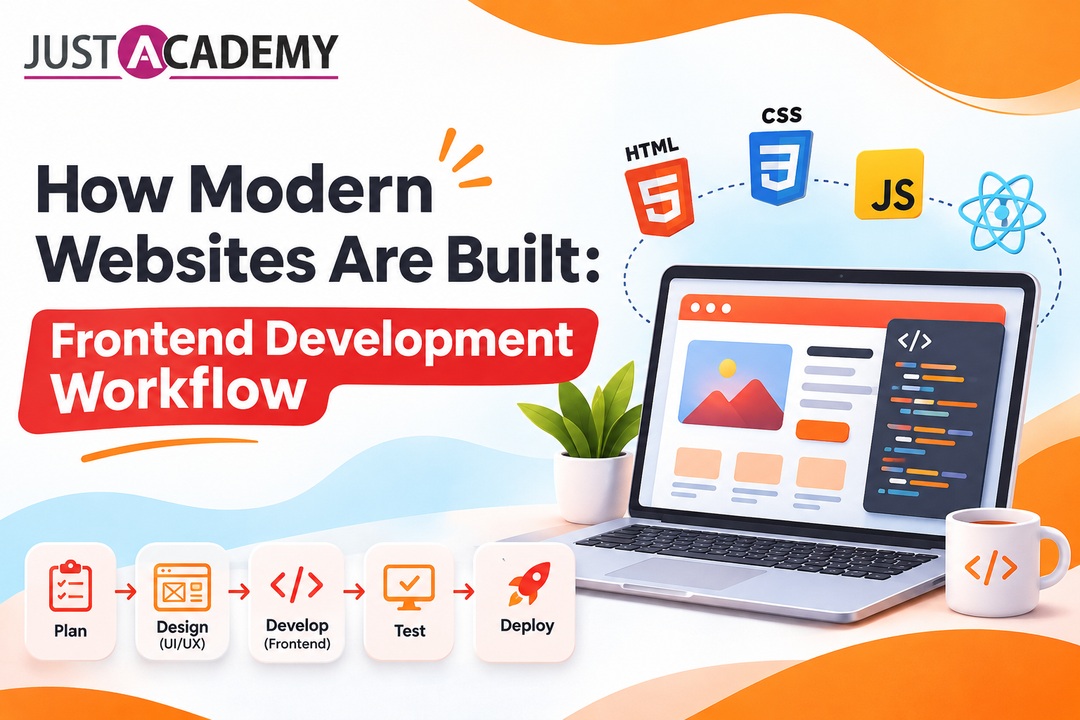
A practical walk through every stage of website development, written for Hyderabad learners who want to think and code like working front end engineers
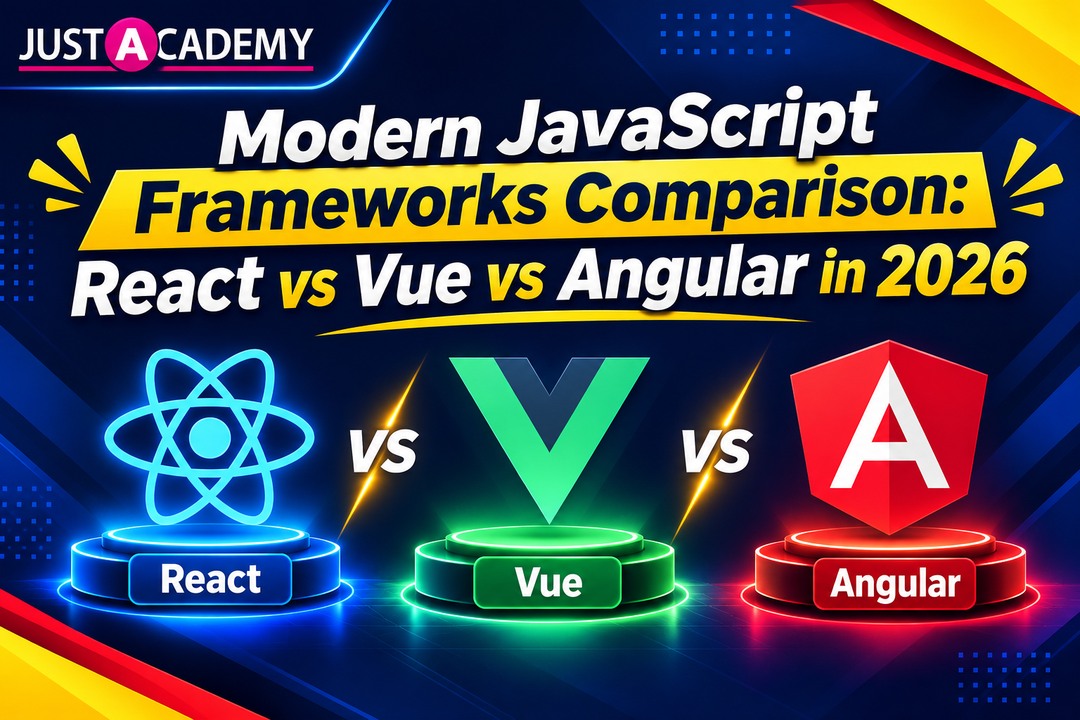
A mentor style breakdown of React, Vue and Angular for Hyderabad learners, covering market share, hiring demand, learning curve and the smartest way to train.
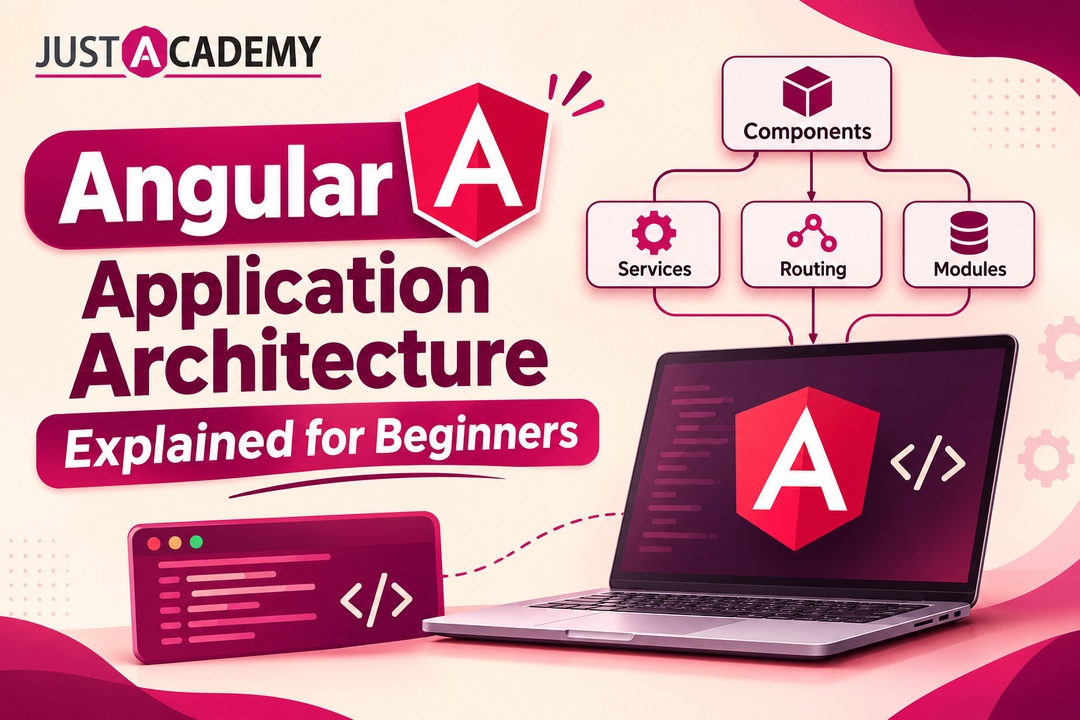
How components, services, standalone building blocks and the Angular CLI fit together, explained in plain words with live interactive and mentor led learning in mind
A practical guide for Hyderabad developers to react hooks, custom hooks and the design patterns that keep real projects clean, taught through live interactive, instructor led and mentor led learning
A practical, honest guide to choosing your first language, understanding modern iOS development, and building a career in Hyderabad’s growing app ecosystem through live interactive, instructor led and mentor led training.
A Hyderabad friendly walkthrough of how real apps get planned, designed, built, tested and shipped, and how live interactive, instructor led and mentor led learning gets you there faster
A grounded, honest guide for Hyderabad learners, career switchers and business owners who want to build real apps with Flutter and learn from mentors, not just videos.
Drop us a Query
+91 99871 84296
Available 24x7 for your queries
Want To Connect with us
🚀 Kickstart Your IT Career
with JustAcademy
Learn Industry-Focused Courses with Live Projects & Placement Assistance
Full Stack Java(Java, Spring Boot, Hibernate, REST API, React JS)
Data Analytics(Excel, SQL, Power BI, Python, Tableau)